
Why “Smart Agriculture” Will Transform Africa
Why “smart agriculture” matters in Africa are no longer a theoretical question for me—it is something I was privileged to walk through, touch, and listen to in the fields and factories of Malawi this December during my ‘’working’’ holiday.
From Theory to Living Systems
Over several days, as lead communication consultant with SOW Communications, I visited three farm projects and held working sessions with CIAT as well as interviews with Malawian media in the context of FInES and MAIIC. What emerged is a clear pattern: Malawi is quietly building a regenerative and climate-smart agricultural economy where productivity, resilience and dignity are inseparable.
Inside the Spaceafrica–Serve The Soil Model
When Ryan Pollard of Serve the Soil describes his work, he does not speak in development buzzwords—he calls it “smart agriculture”. Together with Swiss biomaterials start-up Spaceafrica, his team is operating a 4-hectare demonstration plot that links diverse crops, fish farming, water infrastructure and industrial hemp into one coherent, circular system.
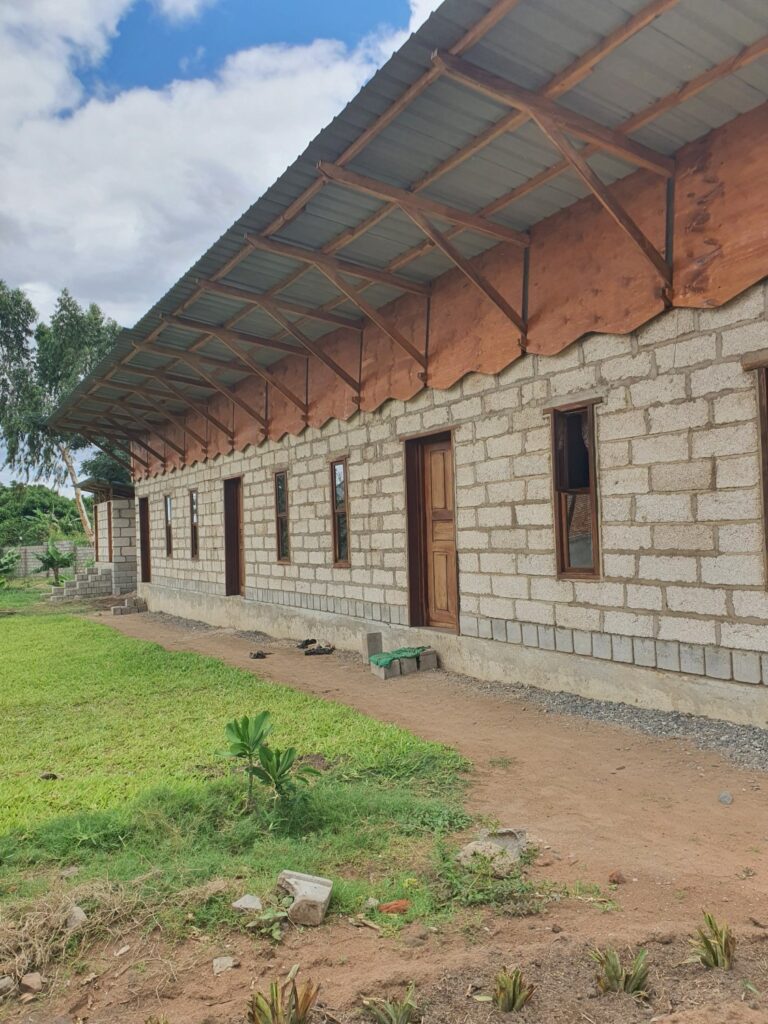
Cash crops, staple crops, fruit trees, biomass plants, fishponds and hemp-based construction are laid out as an integrated risk-management strategy, not as a showcase of “green” aesthetics. The same hemp whose residues would typically be burned is instead transformed into light, robust building materials used to construct the training centre itself—a circular economy made visible in bricks, beams and classrooms.
Smart, Not Just “Sustainable”
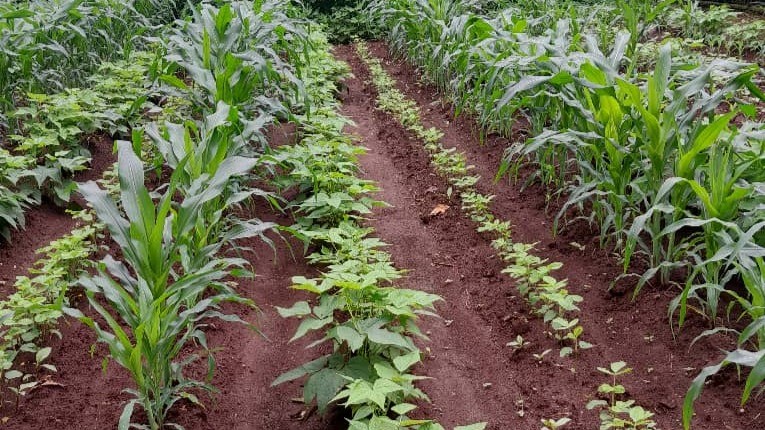
What struck me most in the field was how the language of “sustainability” gives way to language of performance, margins and opportunity. Farmers visiting the syntropic rows in southern Malawi want to know labour requirements, gross margins and market reliability for beans, leafy greens, coffee, bananas and more, not abstract climate metrics.
Serve The Soil’s training model mirrors that pragmatism: two weeks of intensive training, three seasons of monitoring, and an employment pipeline where top performers become trainers, technicians or future staff for hemp and biomaterials operations. This multiplicative approach turns farmers into future trainers and employees, seeding a human ecosystem around the technical one.
Water, Wetlands and Climate Resilience
Behind every “smart” system there is often very unglamorous work on water. On the integrated plot, boreholes are sited to avoid contamination from pit latrines, tapping deeper, safer aquifers in areas where shallow wells dry up or carry E. coli, and baseline data shows women and girls hauling 20-litre containers over long distances just to meet daily needs of 40–60 litres per household.
Protecting wetlands on the site is treated as a responsibility, not an afterthought: drawing down too much water would compromise ecosystems and downstream users in an already climate-stressed landscape. This is climate adaptation made practical—designing agriculture around hydrology and public health as much as around yields.
Smart, Not Just “Sustainable”
What struck me most in the field was how the language of “sustainability” gives way to language of performance, margins and opportunity. Farmers visiting the syntropic rows in southern Malawi want to know labour requirements, gross margins and market reliability for beans, leafy greens, coffee, bananas and more, not abstract climate metrics.
Serve The Soil’s training model mirrors that pragmatism: two weeks of intensive training, three seasons of monitoring, and an employment pipeline where top performers become trainers, technicians or future staff for hemp and biomaterials operations. This multiplicative approach turns farmers into future trainers and employees, seeding a human ecosystem around the technical one.
Water, Wetlands and Climate Resilience
Behind every “smart” system there is often very unglamorous work on water. On the integrated plot, boreholes are sited to avoid contamination from pit latrines, tapping deeper, safer aquifers in areas where shallow wells dry up or carry E. coli, and baseline data shows women and girls hauling 20-litre containers over long distances just to meet daily needs of 40–60 litres per household.
Protecting wetlands on the site is treated as a responsibility, not an afterthought: drawing down too much water would compromise ecosystems and downstream users in an already climate-stressed landscape. This is climate adaptation made practical—designing agriculture around hydrology and public health as much as around yields.
BERL, Jatropha and Blended Finance
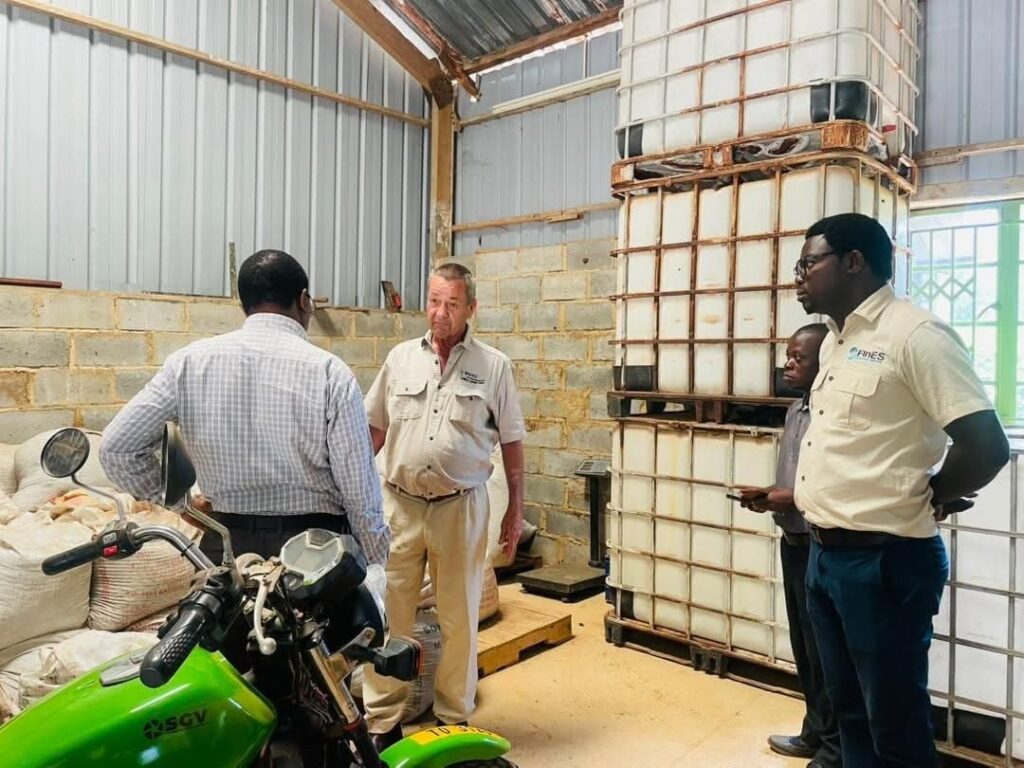
On the energy side of Malawi’s transition, Bio Energy Resources Limited (BERL) is showing how climate-smart agriculture and bioenergy can scale through blended finance. By working with smallholder farmers to plant Jatropha as living fences, BERL turns a boundary crop into biofuel feedstock and organic fertilizer, reducing dependence on imported diesel and chemical fertilizers without displacing food crops.
Through the MAIIC–FInES facility, BERL has accessed concessional investment to build processing capacity—up to 10 tons of Jatropha seed per day today, with an ambition to triple this and produce around one million litres of Jatropha oil per year alongside organic biofertilizers such as JATRO FERT. This is backed by a carefully designed blended finance roadmap that links development capital, carbon finance, digital data systems and landscape partnerships to national goals on diversification and climate-smart agriculture.
Media, Government and the Power of Narrative
During the December visit, Malawian outlets like Times and MBC sat down with BERL, FInES and MAIIC leadership to unpack what these models mean for local livelihoods and national resilience. Their questions went to the heart of the matter: how do farmers benefit, how are soils restored, and how does Malawi shield itself from fossil fuel price shocks while creating new green jobs?
In the field, Serve the Soil is taking a similarly collaborative stance with government extension officers—inviting them into trainings free of charge, positioning them not as competitors but as allies who can carry regenerative, integrated approaches into thousands of households. This is smart systems thinking: work with existing structures, upgrade the knowledge they carry, and let them multiply impact far beyond the boundaries of any one project.
Why This Matters Beyond Malawi
Across these sites and conversations, a new narrative is emerging—one that feels deeply African and sharply future-focused. It is a narrative where:
- Waste becomes feedstock for building materials and biofertilizers
- Boundaries become productive hedges and biodiversity corridors
- Training centres are built from the very biomass farmers learn to grow
- Finance is blended so that risk is shared and opportunity expands
Smart agriculture, in this sense, is not a slogan—it is a discipline of designing value chains that are circular, regenerative and profitable enough to endure climate shocks and market volatility. As 2026 begins, Malawi’s living laboratories—from syntropic agroforestry blocks and integrated hemp plots to Jatropha-powered bioenergy plants—offer a glimpse of what African agricultural transformation can look like when local knowledge, innovative finance and material science work together. The real question now is not whether these models can work—they already are—but how quickly they can scale, and how many partners across the continent are willing to join them in treating “smart agriculture” as the new normal.
If you are working in agriculture, finance, climate or materials science and want to explore collaboration around integrated farming, industrial hemp, bioenergy or circular-economy training models in Malawi and beyond, this is the moment to lean in.
Leave a Reply